





Sawyer Inc. All rights reserved.


Home
/

Sunscreen

Sunscreen
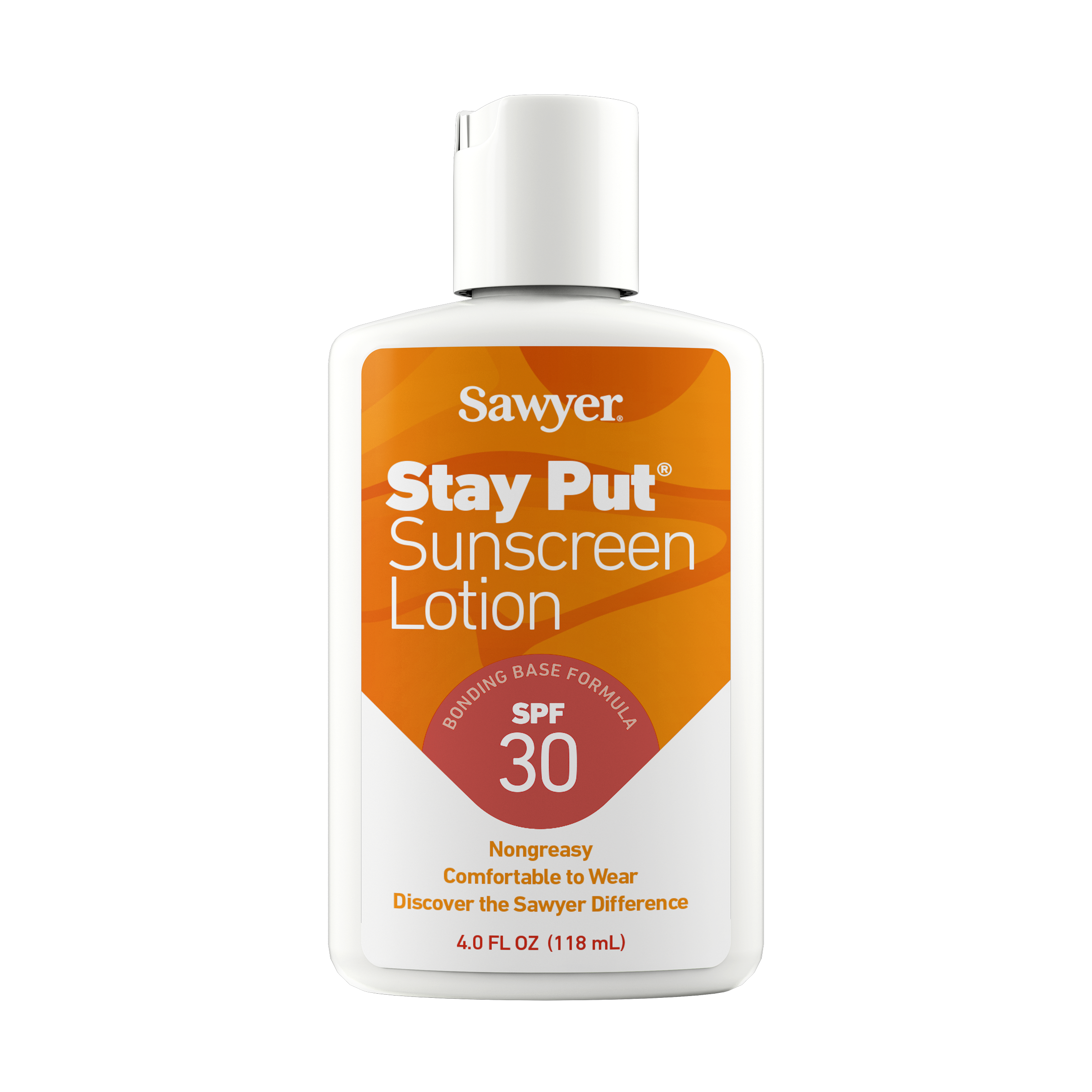
From alpine skiing to backyard activities, makes sure you are using a breathable sunscreen that will keep you protected.
How to use Stay Put Sunscreen
Watch the guide below to learn about the sunscreen:
Resources
Videos
FAQs
All sunscreens will burn your eyes if the lotion is rubbed into the eye area during application. Once applied to cool dry skin, the better sunscreens like our bonding base formula, will not migrate — that is, run down into the eyes from the forehead while sweating or in the water. Older formulas which were designed to work above the skin may still migrate when exposed to water or sweat.
They can. Residual sunscreen on the skin can affect your grip and it can reduce your ability to sweat, which is your body’s mechanism to transfer heat created by your exertion. By not losing adequate heat, your internal body temperature rises, which depletes your energy levels and causes many organs to focus on heat management functions rather than normal support functions. The newer sunscreen formulations work below the skin and allow the skin to breathe and sweat much more efficiently, thereby leaving you with more energy to perform your athletic activity.
If properly applied (1 1/4 ounces per full body coverage) you seldom need more than an SPF 15. However, most people put on only half of the recommended FDA standard. A SPF 15 applied at half rate is effectively a SPF 7, better than nothing but still not a true sunscreen. If you can discipline yourself to put on a generous amount, then after it has fully absorbed into the skin, you will benefit by having less chemicals in the skin which allows your skin to breathe easier. If you just can’t bring yourself to lather it on then jump to a SPF 30 which, when half applied, still leaves you with an effective protection of a SPF 15. If you’re sensitive to oxybensone or benzephenone then stick with the SPF 15 which generally does not include that sunscreen.In planning a trip, use the 1 1/4 ounces per person per day figure as a guideline. If you’re building a tan, or reducing your skin exposure via clothing, then reduce your anticipated need accordingly. Keep in mind that a soaked cotton shirt yields protection equivalent to only a SPF of 4 to 8 only and therefore you may need to wear a sunscreen below the shirt if exposed to water or sweat.
Yes. We would recommend applying the sunscreen first. The trick to a comfortable and effective application of sunscreen it to put it on first thing in the morning or at least 10 minutes before sun exposure to help it fully absorb into your skin. Our SPF 30 sunscreen is a bonding base formula which makes it very breathable while still very effective. You can learn more about this formula at sawyer.com/sunscreen
Sunscreen reapplication depends on the type of sunscreen, your activity level, and environmental conditions. Above-the-skin sunscreens generally need to be reapplied more often than below-the-skin formulas. Factors that can reduce effectiveness include:
Peak sun hours (10 a.m.–3 p.m.) Summer months (especially May–July) High altitude or tropical/equatorial locations Sweating, swimming, towel drying, or friction Using insect repellent with sunscreen Sensitive or thin-skin areas like the nose, ears, shoulders, and feet
If you’re exposed to several of these conditions, consider using a higher SPF, reapplying more frequently, and adding protective clothing, hats, or shade during peak sun hours.
If stored properly in cool, dry location Sawyer Stay Put sunscreen has a shelf life of 5+ years.


